

Collaborative and Trustworthy AI
A workshop dedicated to the future of safe and cooperative intelligent agents.
CARE.AI Lab
School of Computing and Information Systems
Singapore Management University
20th January, 2026
2:15 PM - 6:30 PM
SMU Administration Building, Level 5
Seminar Room 5-1
81 Victoria Street, Singapore 188065
About the Workshop
Join us for a day of insightful discussions on building AI systems that are both collaborative and trustworthy, bringing together leading experts to bridge the gap between multi-agent systems, human-AI teaming, and rigorous safety mechanisms. We will explore high-stakes scenarios such as strategic agents optimizing public health interventions and AI co-pilots autonomously negotiating consensus in large-scale collectives. Realizing this vision requires integrating modern generative capabilities with foundational decision-making frameworks, including security games, automated negotiation, and interactive learning. This workshop focuses on the algorithmic breakthroughs needed to transform these powerful models into robust partners capable of planning over long horizons and coordinating safely in the real world.
Invited Speakers
Agenda
Speakers
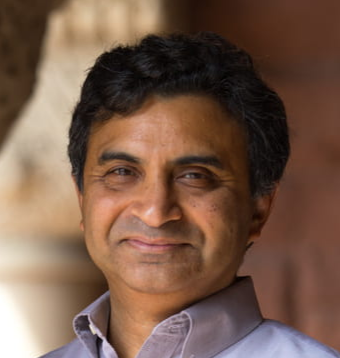
Milind Tambe is Gordon McKay Professor of Computer Science at Harvard University; concurrently, he is also Principal Scientist and Director for “AI for Social Good” at Google Research. Prof. Tambe and his team have developed innovative AI and multi-agent reasoning systems that have been successfully deployed to deliver real-world impact in public health (e.g., maternal and child health), public safety, and wildlife conservation. He is the recipient of the AAAI Award for Artificial Intelligence for the Benefit of Humanity, the AAAI Feigenbaum Prize, the IJCAI John McCarthy Award, the AAAI Robert S. Engelmore Memorial Lecture Award, the AAMAS ACM/SIGAI Autonomous Agents Research Award, and the INFORMS Wagner Prize for excellence in Operations Research practice. He is a fellow of AAAI and ACM. For his work on AI and public safety, he has also received the Military Operations Research Society Rist Prize for best implemented national security operations research study, the Columbus Fellowship Foundation Homeland security award, and commendations and certificates of appreciation from the US Coast Guard, the Federal Air Marshals Service, and airport police at the city of Los Angeles.
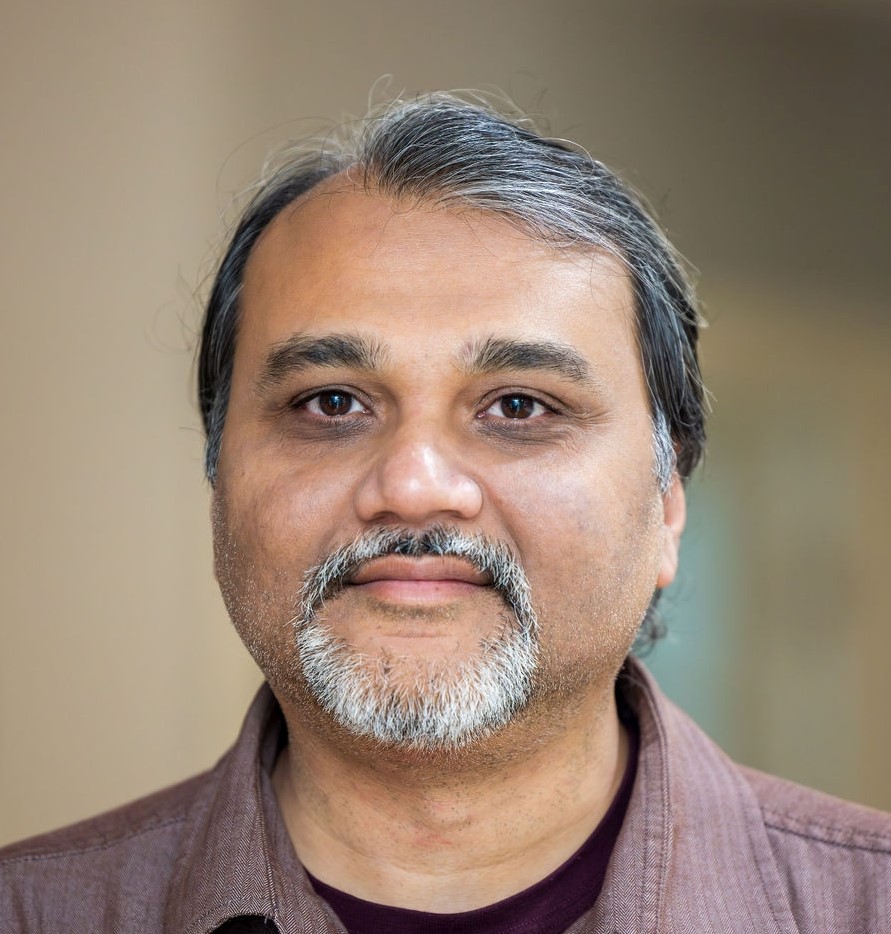
Mausam is a Professor of Computer Science at IIT Delhi, and served as the founding head of Yardi School of Artificial Intelligence until September 2023. He is also an affiliate professor at University of Washington, Seattle. Recently, he spent a year long sabbatical working as a Visiting NLP Researcher at Bloomberg's AI group. With an over twenty year research experience in artificial intelligence, he has, over time, contributed to many research areas such as large scale information extraction over the Web, AI approaches for optimizing crowdsourced workflows, and probabilistic planning algorithms. More recently, his research is exploring neuro-symbolic machine learning, computer vision for radiology, NLP for robotics, multilingual NLP, and several threads in intelligent information systems that include information extraction, knowledge base completion, question answering, and dialogue systems. He has over 100 archival papers to his credit, along with a book, two best paper awards, and one test of time award. Mausam was awarded the AAAI Fellow status in 2024 for his sustained contributions to the field of artificial intelligence and unusual distinction in the profession. He was also elected as a fellow of Indian National Academy of Engineering -- an apex body for India's most distinguished engineers, engineer-scientists and technologists. He was named as one of the 30 Indian Minds Leading the AI Revolution by Forbes India. He has had the privilege of being a program chair for two top conferences, AAAI 2021, and ICAPS 2017, and also served as an Editor-in-Chief of ACL Rolling Review from 2022 to 2024. He received his PhD from University of Washington in 2007 and a B.Tech. from IIT Delhi in 2001.

Prof. Gal Kaminka is a professor at the computer science department and the brain research center in Bar Ilan University, where he heads the MAVERICK research group conducting research in artificial intelligence and robotics. He is the author or co-author of approximately 180 scientific publications and several granted patents. He has held positions on the executive boards of leading scientific organizations and received awards recognizing his contributions to AI, including the Israeli Landau Award, Fellowship of the European Association for Artificial Intelligence (EurAI), Fellowship of the Association for the Advancement of Artificial Intelligence (AAAI), and a Radcliffe Fellowship (Harvard). In his non-existent spare time, he is an occasional entrepreneur and consultant to AI and robotics companies.
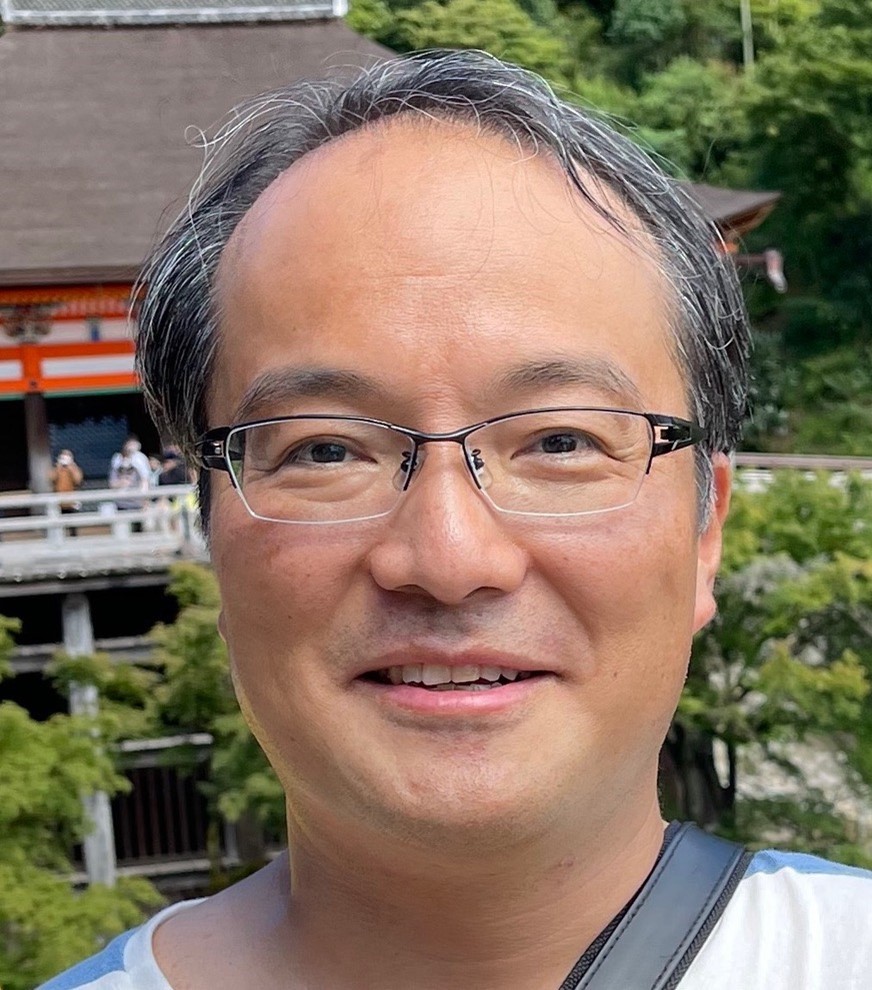
Dr. Takayuki ITO is Professor of Kyoto University. He received the B.E., M.E, and Doctor of Engineering from the Nagoya Institute of Technology in 1995, 1997, and 2000, respectively. From 1999 to 2001, he was a research fellow of the Japan Society for the Promotion of Science (JSPS). From 2000 to 2001, he was a visiting researcher at USC/ISI (University of Southern California/Information Sciences Institute). From April 2001 to March 2003, he was an associate professor of Japan Advanced Institute of Science and Technology (JAIST). From April 2004 to March 2013, he was an associate professor of Nagoya Institute of Technology. From April 2014 to September 2020, he was a professor of Nagoya Institute of Technology. From October 2020, he is a professor of Kyoto University. From 2005 to 2006, he is a visiting researcher at Division of Engineering and Applied Science, Harvard University and a visiting researcher at the Center for Coordination Science, MIT Sloan School of Management. From 2008 to 2010, he was a visiting researcher at the Center for Collective Intelligence, MIT Sloan School of Management. From 2017 to 2018, he was an invited researcher of Artificial Intelligence Center of AIST, JAPAN. From March 5, 2019, he is the CTO of AgreeBit, inc. He is Steering Committee Chair of PRIMA, Steering Committee Member of PRICAI, Executive Committee Member of IEEE Computer Society Technical Committee on Intelligent Informatics, the PC-chair of AAMAS2013, PRIMA2009, the Local Arrangements Chair of IJCAI-PRICAI2020, General-Chair of PRICAI2024, PRIMA2024, PRIMA2020, PRIMA2014, and was a SPC/PC member in many top-level conferences (IJCAI, AAMAS, ECAI, AAAI, etc). He was a board member of IFAAMAS. He received the JSAI (Japan Society for Artificial Intelligence) Contribution Award, the JSAI Achievement Award, the JSPS Prize, 2014, the Prize for Science and Technology (Research Category), The Commendation for Science and Technology by the Minister of Education, Culture, Sports, Science, and Technology, 2013, the Young Scientists' Prize, The Commendation for Science and Technology by the Minister of Education, Culture, Sports, Science, and Technology, 2007, the Nagao Special Research Award of the Information Processing Society of Japan, 2007, the Best Paper Award of AAMAS2006, the 2005 Best Paper Award from Japan Society for Software Science and Technology, the Best Paper Award in the 66th annual conference of 66th Information Processing Society of Japan, and the Super Creator Award of 2004 IPA Exploratory Software Creation Projects. He is Principle Investigator of the Japan Cabinet Funding Program for Next Generation World-Leading Researchers (NEXT Program). Further, he has several companies, which are handling web-based systems and enterprise distributed systems. His main research interests include multi-agent systems, intelligent agents, collective intelligence, group decision support system, etc.
Jana Doppa is the Huie-Rogers Endowed Chair Professor of Computer Science and Berry Distinguished Professor in Engineering at Washington State University. He is an ACM Distinguished Member, AAAI Senior Member, was selected for an Early Career Spotlight by the IJCAI Conference, and received an NSF CAREER Award. His research is on AI to Accelerate Science and Engineering with a focus on both foundational AI research and use-inspired AI for domains including hardware, material science, agriculture, and additive manufacturing. He and his collaborators won six Best Paper Awards from top-tier AI and electronic design automation venues. At WSU, he received the Faculty Mid-Career Award; Voiland College of Engineering Anjan Bose Outstanding Researcher Award, Outstanding Junior Faculty in Research Award, and Reid-Miller Teaching Excellence Award.

Matthew E. Taylor received his PhD in 2008 and then worked at the University of Southern California, Lafayette College, and Washington State University. He moved to Edmonton in 2017 to lead the Edmonton Borealis AI lab, the artificial intelligence arm of the Royal Bank of Canada. In 2020 he returned to academia, joining the department of Computing Science at the University of Alberta and leading the Intelligent Robot Learning Lab (http://irll.ca). Matt is now a Full Professor as well as a CIFAR AI Chair, working on a range of fundamental and applied AI problems related to reinforcement learning, human-AI teaming, multi-agent coordination, and robotics.
Organizing Committee
Pradeep Varakantham
Akshat Kumar
Cao Zhiguang, Assistant Professor
Mai Anh Tien, Assistant Professor
Xinrun Wang, Assistant Professor
Hosted by the CARE.AI Lab at the School of Computing and Information Systems, Singapore Management University (SMU).